Role of Storytelling in Fashion – Powering Self-Expression
Streetwear is much more than an outfit choice for young creatives in cities worldwide. It is a living story, woven from cultural roots and bold personal perspectives, emerging from American urban communities and powered by self-expression. Each piece you wear becomes part of your narrative of identity and resistance, transforming clothing into a visual language that signals who you are and what you stand for. Discover how thoughtful fashion storytelling shapes meaning, connects cultures, and redefines authenticity in every look.
Table of Contents
- Defining Storytelling In Streetwear Fashion
- Key Types Of Fashion Narratives Today
- How Storytelling Drives Brand Identity
- Storytelling’s Impact On Consumer Choices
- Common Pitfalls In Fashion Storytelling
Key Takeaways
| Point | Details |
|---|---|
| Streetwear as Narrative | Streetwear serves as a medium for cultural expression, allowing individuals to communicate personal and social narratives through clothing choices. |
| Types of Fashion Narratives | Fashion narratives today include Heritage, Resistance, Identity, Sustainability, and Digital Age stories, each impacting cultural dialogue and individual identity. |
| Impact on Consumer Behavior | Storytelling significantly influences consumer choices by creating emotional connections and aligning brand narratives with personal values. |
| Common Storytelling Pitfalls | Brands should avoid pitfalls like inauthentic narratives and inconsistent messaging to cultivate genuine and effective storytelling that resonates with their audience. |
Defining Storytelling in Streetwear Fashion
Streetwear transcends mere clothing - it’s a powerful narrative medium rooted in cultural expression. Streetwear originates from urban communities as more than just fashion, representing a dynamic language of identity and resistance. Each garment becomes a canvas, communicating personal stories, cultural heritage, and social perspectives through carefully curated design elements.
At its core, streetwear storytelling involves deliberate visual communication. Designers and wearers use clothing as a strategic platform to articulate complex narratives about personal experience, community belonging, and social commentary. This goes beyond aesthetic choices - it’s a sophisticated form of non-verbal communication where symbols, colors, cuts, and textures serve as narrative devices.
The storytelling mechanisms in streetwear are multifaceted:
- Cultural Representation: Garments that honor historical struggles and achievements
- Personal Branding: Clothing as a method of individual narrative projection
- Social Dialogue: Using fashion to spark conversations about identity
- Resistance and Empowerment: Challenging mainstream fashion narratives
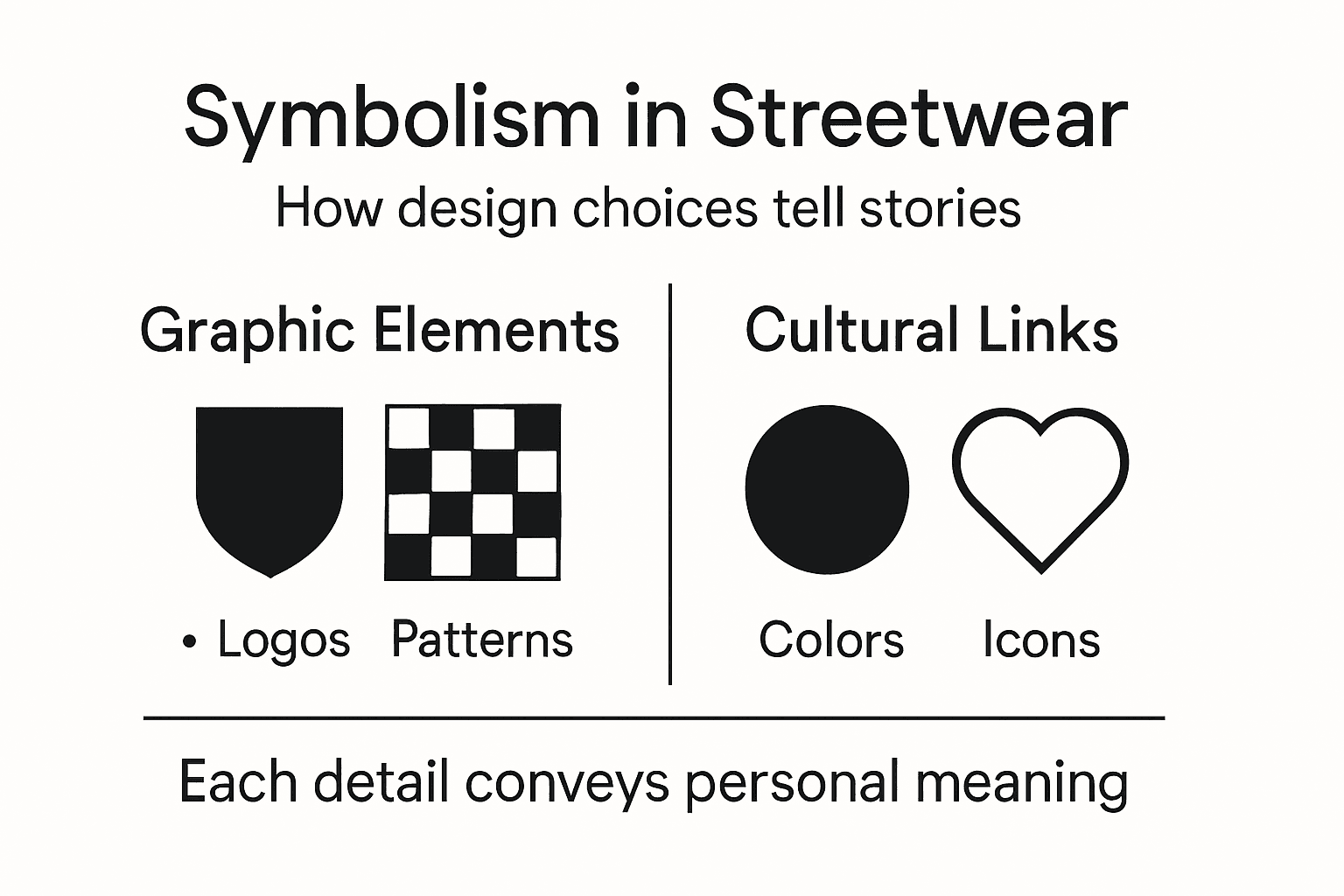
Symbolism plays a critical role in this storytelling ecosystem. Every graphic, pattern, and design choice becomes a deliberate statement about the wearer’s worldview, cultural background, and personal philosophy. Symbolism in street fashion transforms clothing from passive objects into active storytelling instruments.
Pro tip: Approach streetwear as a language - each piece you choose tells a chapter of your personal narrative.
Key Types of Fashion Narratives Today
Fashion narratives have evolved far beyond simple clothing choices, emerging as complex communication systems that reflect individual and collective experiences. Contemporary fashion explores cultural identities through intricate storytelling mechanisms that go well beyond aesthetic considerations.
The primary types of fashion narratives in today’s global landscape can be categorized into distinct yet interconnected domains:
- Heritage Narratives: Clothing that connects personal and cultural histories
- Resistance Narratives: Fashion as a tool for social and political commentary
- Identity Narratives: Garments expressing personal and community belonging
- Sustainability Narratives: Clothing that communicates environmental consciousness
- Digital Age Narratives: Styles emerging from online cultural exchanges
Digital platforms have dramatically transformed how fashion narratives are constructed and shared. Global fashion storytelling now blends heritage and modernity through unprecedented channels of communication, enabling designers and consumers to create multilayered cultural dialogues.
These narratives are not static but continuously evolving, reflecting the dynamic nature of human experience. They represent powerful tools for self-expression, social critique, and cultural understanding, transforming clothing from mere fabric into meaningful statements about who we are and what we believe.
Here’s how major types of fashion narratives differ in focus and impact:
| Narrative Type | Main Focus | Typical Impact |
|---|---|---|
| Heritage Narratives | Cultural and historical connections | Strengthens identity awareness |
| Resistance Narratives | Social and political critique | Inspires social engagement |
| Identity Narratives | Self and community expression | Builds belonging and solidarity |
| Sustainability Narratives | Environmental responsibility | Promotes ethical choices |
| Digital Age Narratives | Online-driven cultural exchange | Accelerates trend evolution |
Pro tip: Choose clothing that tells your unique story, not just one that follows current trends.
How Storytelling Drives Brand Identity
Brand storytelling has transformed from simple marketing tactics into a sophisticated communication strategy that defines organizational identity. Storytelling builds emotional connections between brands and consumers, transcending traditional product-focused approaches.
The core mechanisms of brand storytelling involve multiple strategic elements:
- Cultural Positioning: Establishing brand values and worldview
- Emotional Resonance: Creating authentic connections with audiences
- Historical Narrative: Communicating brand heritage and evolution
- Visual Metaphors: Using imagery to convey complex brand messages
- Personal Experience: Transforming consumer interactions into compelling narratives
Digital technologies have revolutionized how brands construct and share their stories. Strategic communication processes shape brand perceptions by enabling more nuanced, interactive, and globally accessible narrative experiences.

Successful brand storytelling is not about creating fictional accounts, but about revealing genuine organizational DNA. It requires deep understanding of core values, transparent communication, and the ability to connect individual consumer experiences with broader brand missions.
Pro tip: Craft your brand’s story around authentic experiences that genuinely reflect your core values and mission.
Storytelling’s Impact on Consumer Choices
Consumer psychology reveals that storytelling is far more than simple marketing - it’s a powerful mechanism for driving purchasing decisions. Storytelling stimulates cognitive responses that transform how individuals perceive and interact with brands.
The key psychological mechanisms through which storytelling influences consumer behavior include:
- Emotional Resonance: Creating deep psychological connections
- Identity Alignment: Helping consumers see themselves in brand narratives
- Trust Building: Establishing credibility through authentic stories
- Cognitive Engagement: Triggering mental processes beyond rational decision-making
- Memory Retention: Making brand messages more memorable and impactful
Digital marketing has revolutionized storytelling’s potential. Narrative strategies enhance brand affinity by creating immersive experiences that transcend traditional advertising approaches.
Ultimately, effective storytelling transforms consumer choices from transactional interactions to meaningful connections. It’s not about selling a product, but about creating a narrative that resonates with individual experiences, values, and aspirations.
Pro tip: Craft stories that speak to your audience’s deeper motivations, not just surface-level desires.
Common Pitfalls in Fashion Storytelling
Fashion storytelling requires nuanced strategy, yet many brands repeatedly stumble into critical narrative traps. Brands frequently fail by misaligning storytelling approaches with their core brand values and audience expectations.
The most significant storytelling pitfalls include:
- Inauthentic Narratives: Creating stories disconnected from brand identity
- Overemphasis on Products: Focusing on features instead of emotional experiences
- Lack of Audience Understanding: Misreading consumer psychological triggers
- Inconsistent Messaging: Presenting fragmented or contradictory brand stories
- Superficial Emotional Appeal: Generating shallow, non-resonant storytelling
Digital communication has amplified storytelling challenges. Common storytelling mistakes undermine brand connection by failing to create genuine, compelling narratives that inspire meaningful engagement.
Successful fashion storytelling demands more than creative writing - it requires deep psychological insight, cultural awareness, and a genuine commitment to representing authentic brand experiences. Brands must move beyond surface-level narratives to create stories that truly reflect their unique identity and resonate with their audience’s deeper aspirations.
Below is a summary of common pitfalls in fashion storytelling and how to avoid them:
| Pitfall | Risk to Brand | Recommended Solution |
|---|---|---|
| Inauthentic Narratives | Loss of credibility | Align stories with core values |
| Overemphasis on Products | Weak emotional connection | Highlight consumer experiences |
| Lack of Audience Insight | Irrelevant messaging | Research target audience deeply |
| Inconsistent Storylines | Brand confusion | Ensure cohesive messaging |
| Superficial Emotion | Poor audience resonance | Craft authentic, meaningful stories |
Pro tip: Audit your brand’s storytelling by ensuring every narrative genuinely reflects your core values and speaks directly to your audience’s lived experiences.
Express Your Unique Story Through Bold Streetwear
The article highlights the powerful role storytelling plays in fashion by helping individuals communicate their personal identity, cultural background, and deeper values. Many struggle with finding authentic, meaningful ways to express themselves beyond mere trends and superficial designs. At Eledoasis.com, we embrace this challenge by offering streetwear that merges art, symbolism, and self-expression. Our collection of hats, hoodies, tees, and accessories transforms everyday apparel into dynamic storytelling tools that reflect bold personalities and visionary lifestyles.

Discover apparel crafted to awaken your personal narrative and make your voice heard. Don’t settle for generic fashion that misses the emotional connection and cultural depth your story deserves. Visit Eledoasis.com now to explore styles inspired by street culture’s rich storytelling tradition. Elevate your wardrobe with pieces that speak your truth and inspire meaningful conversations. Your authentic expression starts here.
Frequently Asked Questions
What is the role of storytelling in fashion?
Storytelling in fashion serves as a medium for cultural expression, personal narratives, and social commentary, transforming clothing into a form of non-verbal communication that reflects identity and values.
How does streetwear use storytelling to convey messages?
Streetwear utilizes symbolism, colors, and design elements to articulate complex narratives about personal experiences, cultural heritage, and social perspectives, making each garment a canvas for storytelling.
What types of fashion narratives exist today?
Fashion narratives can be categorized into key types: heritage narratives that connect cultural histories, resistance narratives for social commentary, identity narratives representing personal and community belonging, sustainability narratives advocating for environmental consciousness, and digital age narratives reflecting online cultural exchanges.
What are common pitfalls in fashion storytelling?
Common pitfalls include creating inauthentic narratives that misalign with core values, overemphasizing products instead of emotional experiences, lacking audience understanding, presenting inconsistent messaging, and crafting superficial emotional appeals that fail to resonate with consumers.