Symbolism in Streetwear: Unlocking Self-Expression
Bold graphics and iconic logos are more than just eye-catching details for streetwear fans. Each piece says something personal, connecting wearers to deeper cultural stories rooted in hip-hop, skateboarding, and urban communities from cities across the United States. Streetwear becomes a type of visual statement where performative identity takes center stage, empowering young adults to turn every outfit into a message about who they are and the communities they claim.
Table of Contents
- Core Concepts of Symbolism in Streetwear
- Types of Symbols and Their Origins
- How Logos and Graphics Influence Meaning
- Cultural Narratives and Identity in Fashion
- Risks of Misinterpretation and Ethical Concerns
Key Takeaways
| Point | Details |
|---|---|
| Symbolism in Streetwear | Streetwear serves as a language of self-expression, helping individuals convey their identity, values, and group affiliations through fashion. |
| Cultural Roots | Streetwear symbols originate from various urban subcultures, primarily within African American and Latino communities, embodying rich narratives and histories. |
| Ethical Considerations | It’s essential to approach streetwear symbolism with cultural sensitivity to avoid appropriation, exploitation, and misrepresentation. |
| Personal Narrative | Consumers should choose streetwear pieces that genuinely reflect their personal stories and cultural backgrounds for authentic representation. |
Core Concepts of Symbolism in Streetwear
Streetwear transcends mere clothing - it’s a powerful language of self-expression and cultural communication. Streetwear acts as a medium for personal narrative, allowing individuals to communicate complex aspects of their identity through carefully curated fashion choices.
At its core, streetwear symbolism operates through several key dimensions:
- Personal Identity Projection: Each garment becomes a canvas for communicating individual values and beliefs
- Cultural Signaling: Clothing choices represent membership in specific social groups or subcultures
- Emotional Expression: Styles and symbols communicate internal emotional states
- Resistance and Empowerment: Fashion serves as a tool for challenging societal norms
Understanding these dimensions reveals how streetwear functions beyond aesthetic appeal. Performative identity emerges as a critical concept, where individuals strategically use clothing to stage their internal narratives and social positioning. Young fashion enthusiasts leverage streetwear as a dynamic form of nonverbal communication, transforming fabric and design into complex personal statements.
Cultural anthropologists have documented how streetwear constructs social identities, emphasizing that these fashion choices are deliberate strategies of self-representation. The process involves selecting specific brands, designs, and symbolic elements that resonate with personal experiences and aspirational identities.
Pro tip: Select streetwear pieces that authentically reflect your personal narrative, not just trending aesthetics.
Types of Symbols and Their Origins
Streetfashion symbols are complex visual narratives rooted in deep cultural landscapes, emerging from urban subcultures that have transformed clothing into a powerful communication medium. Iconic streetwear trademarks represent intricate semiotic systems that communicate far more than aesthetic preferences.
These symbolic elements originate from multiple interconnected cultural domains:
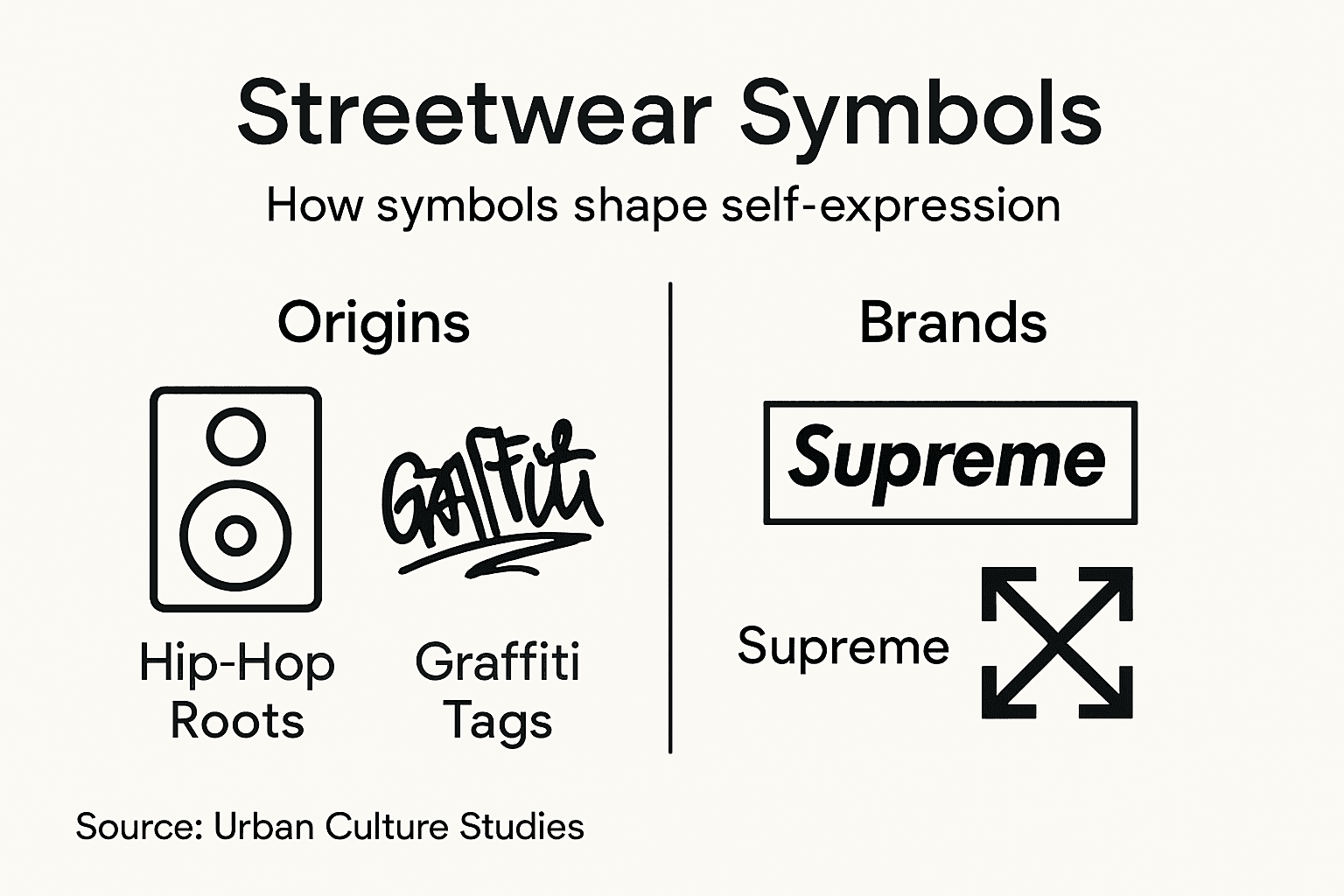
- Hip-Hop Iconography: Graphics representing urban musical heritage
- Skateboarding Aesthetics: Rebellious designs symbolizing counterculture movements
- Graffiti Art Influences: Bold typography and graphic representations
- Subcultural Resistance Symbols: Designs challenging mainstream social narratives
- Urban Community Markers: Visual elements signaling group identity and belonging
Streetwear symbols trace their origins through urban cultural movements, particularly within African American and Latino communities in major United States cities. These symbols aren’t merely decorative - they’re complex language systems communicating personal histories, social experiences, and collective struggles.
Brands like Supreme, Bape, and Off-White have masterfully transformed these symbolic languages into global fashion dialects. Brand logos become more than commercial markers - they represent entire philosophical and cultural statements about identity, resistance, and self-expression.
Here’s a summary of how major streetwear brands utilize symbolism in their designs:
| Brand | Symbolic Approach | Example Symbol or Graphic |
|---|---|---|
| Supreme | Rebellion and exclusivity | Box logo in red/white |
| Bape | Urban camouflage, playfulness | Ape head motif, camo prints |
| Off-White | Industrial, conceptual design | Diagonal stripes, zip ties |
| Nike | Achievement, athletic culture | Swoosh logo |
| Stüssy | Surf/skate heritage, graffiti | Handwritten signature logo |
Pro tip: Research the cultural context behind streetwear symbols to understand their deeper meaning beyond surface-level aesthetics.
How Logos and Graphics Influence Meaning
Logos and graphic designs function as powerful semiotic tools that transform streetwear from mere clothing into complex narrative devices. These visual elements transcend aesthetic decoration, becoming intricate communication channels that speak volumes about identity, culture, and personal philosophy.
The significance of logos and graphics in streetwear can be understood through multiple dimensions:
- Cultural Authentication: Symbols that validate subcultural membership
- Personal Narrative: Graphics representing individual experiences
- Ideological Statement: Visual designs challenging social norms
- Emotional Expression: Imagery communicating internal psychological states
- Social Positioning: Logos signaling group affiliation and status
Iconic brand logos communicate deep cultural credibility beyond simple commercial branding. The Supreme box logo or Nike’s swoosh aren’t just corporate marks - they’re powerful cultural signifiers that represent entire philosophical movements, rebellion, and collective identity.

Understanding these graphics requires recognizing them as sophisticated language systems. Symbolic representation in streetwear functions like visual poetry, where each graphic element carries multiple layers of meaning - personal, social, and historical. The most compelling streetwear designs invite viewers to decode their complex narrative landscapes.
Pro tip: Learn the historical and cultural context behind graphic designs to truly appreciate their deeper symbolic significance.
Cultural Narratives and Identity in Fashion
Generation Z uses streetwear as a transformative medium for identity expression, turning clothing into a complex language of personal and cultural communication. Streetwear transcends traditional fashion boundaries, emerging as a powerful platform for storytelling, rebellion, and social commentary.
The cultural dimensions of identity formation through streetwear include:
- Subcultural Representation: Connecting with communities like skateboarding and hip-hop
- Personal Rebellion: Challenging mainstream social narratives
- Collective Identity: Signaling belonging to specific social groups
- Generational Values: Reflecting contemporary social perspectives
- Emotional Authenticity: Expressing internal psychological states through visual design
Streetwear reflects diverse cultural influences and social values, functioning as a dynamic canvas where individual and collective identities intersect. Cultural narratives embedded in fashion choices communicate complex stories of resistance, creativity, and personal evolution. Each garment becomes a statement, a piece of wearable art that speaks volumes about the wearer’s worldview and social positioning.
The most compelling streetwear designs invite interpretation, challenging viewers to decode the intricate layers of meaning woven into fabric, graphics, and style. These are not just clothes - they’re living, breathing representations of cultural identity and personal philosophy.
Pro tip: Choose streetwear pieces that genuinely resonate with your personal story and cultural background.
Risks of Misinterpretation and Ethical Concerns
Streetwear symbols carry complex potential for cultural misunderstandings, representing a nuanced landscape where visual communication can easily become problematic if not approached with sensitivity and deep cultural awareness. The visual language of streetwear demands careful navigation to prevent unintentional appropriation or offensive representation.
Key ethical risks in streetwear symbolism include:
- Cultural Appropriation: Adopting symbols without understanding their original context
- Stereotypical Representation: Reducing complex cultural experiences to superficial imagery
- Commercial Exploitation: Commodifying meaningful symbols for profit
- Historical Misrepresentation: Stripping symbols of their original significance
- Unintentional Offense: Using symbols without comprehending their deeper meanings
Consumer behavior surrounding streetwear symbols raises significant ethical questions, particularly regarding the potential for creating brand-driven narratives that overshadow authentic cultural experiences. Symbolic integrity becomes crucial - understanding that each design element carries weight beyond its aesthetic appeal.
The following table compares common risks associated with streetwear symbolism and strategies to avoid them:
| Risk Type | Description | Mitigation Strategy |
|---|---|---|
| Cultural Appropriation | Using symbols out of context | Research origins and meaning |
| Stereotyping | Oversimplifying cultural identities | Consult cultural experts |
| Commercial Exploitation | Profiting off sacred symbols | Give credit and support creators |
| Historical Distortion | Misrepresenting symbolic histories | Verify historical accuracy |
| Unintentional Offense | Offending groups unknowingly | Seek community feedback |
Navigating these ethical considerations requires active research, respectful engagement, and a commitment to understanding the rich cultural narratives embedded within streetwear design. Consumers and designers must move beyond surface-level appreciation to develop genuine cultural literacy and authentic representation.
Pro tip: Always research the cultural origins of streetwear symbols before incorporating them into your personal style.
Express Your Unique Identity with Symbolic Streetwear from ELEDOasis
The challenge in unlocking your true self-expression through streetwear lies in finding bold pieces that truly tell your personal story and resonate with your cultural background. This article highlights the importance of symbolism and authentic narratives in fashion choices. At ELEDOasis, we understand that streetwear is not just about aesthetics but a powerful medium for communicating who you are. Whether you want to embrace emotional authenticity or showcase your social positioning, our collections are designed to reflect those deeper layers of meaning.
Explore the Zodiac Jackets collection - unisex for visionary apparel that blends art and symbolism into standout statement pieces. Complement your style with our Oversized fit Hoodies - ELEDOasis that fuse comfort and cultural cues helping you project confidence and individuality.

Start transforming your wardrobe into a canvas of self-expression today. Visit ELEDOasis.com to discover streetwear that empowers your identity and sends your unique message loudly and clearly. Don’t wait to wear what truly defines your worldview and passion for creative rebellion.
Frequently Asked Questions
What is the significance of symbolism in streetwear?
Symbolism in streetwear serves as a powerful medium for self-expression and cultural communication, allowing individuals to convey their personal identity, beliefs, and emotional states through their clothing choices.
How do streetwear symbols reflect cultural narratives?
Streetwear symbols often originate from urban subcultures and represent complex social experiences, historical contexts, and individual stories, making them a rich canvas for conveying cultural narratives and identity.
What should I consider when choosing streetwear pieces?
When selecting streetwear items, it’s important to choose pieces that authentically reflect your personal narrative rather than just current trends. Understanding the cultural significance behind symbols can enhance your connection to the items you wear.
What are some ethical considerations regarding streetwear symbolism?
Key ethical considerations include avoiding cultural appropriation, ensuring accurate representation of cultural histories, and being mindful of the potential for commercial exploitation of meaningful symbols. Engaging with and understanding the cultural context is vital.
Recommended
- 7 Ways Symbolism in Streetwear Empowers Self-Expression – ELEDOasis
- 7 Inspiring Symbolism in Fashion Examples for Self-Expression – ELEDOasis
- 7 Inspiring Symbolism in Fashion: Self-Expression Examples – ELEDOasis
- 7 Inspiring Symbolism in Fashion Examples for Self-Expression – ELEDOasis
- What Is Graphic Streetwear and Why It Matters – IGZ Clothing
- What Is California Streetwear and Why It Matters | JuustAShirt Blog