Why fashion trends change: cycles and self-expression
Fashion feels unpredictable, but science reveals a different story. Researchers analyzing decades of images found that trends follow approximately 20-year cycles, driven by a constant tension between conformity and differentiation. This pattern isn’t random chaos. It’s a rhythm shaped by our desire to fit in while standing out. Understanding these cycles gives you power to anticipate shifts, refine your wardrobe, and express your identity with confidence. For streetwear enthusiasts, this knowledge transforms how you approach personal style and navigate the ever-changing landscape of youth fashion culture.
Table of Contents
- Key takeaways
- The science behind fashion’s 20-year cycle
- How streetwear culture drives rapid trend shifts
- Balancing conformity and differentiation in your style
- The future of fashion trends: what to expect
- Explore fresh styles to express your unique look
- FAQ
Key Takeaways
| Point | Details |
|---|---|
| Two decade cycle | Fashion trends follow a roughly twenty year cycle driven by the push to conform and the push to differentiate. |
| Conformity and differentiation | Social pressure creates conformity, saturation fatigue follows when many adopt the same look, and innovators revive forgotten styles to spark the next wave. |
| Streetwear acceleration | Since the 1980s fragmentation and media growth have compressed cycles from about twenty years to five to ten years. |
| Practical guidance | Track current decade aesthetics and watch for early revivals in underground scenes to anticipate the next wave. |
The science behind fashion’s 20-year cycle
Researchers at Northwestern University analyzed over 100 years of fashion photographs to uncover something remarkable. Fashion trends follow 20-year cycles, a pattern driven by two opposing forces constantly battling for dominance. Conformity pulls us toward what’s popular and socially accepted. Differentiation pushes us to innovate and create something fresh. When everyone starts wearing the same style, the urge to stand out grows stronger. Eventually, enough people break away that a new trend emerges. Then the cycle repeats.
“The tension between conformity and differentiation creates predictable oscillations in fashion preferences, with styles returning approximately every two decades as new generations reinterpret past aesthetics.”
This mathematical model explains why bell bottoms disappeared in the 1980s but returned in the 2000s. It clarifies why minimalism dominated the 1990s before maximalism roared back. The data reveals specific patterns:
| Decade | Dominant Style | Cycle Position |
|---|---|---|
| 1960s | Mini skirts, bold patterns | Differentiation peak |
| 1980s | Power suits, structured silhouettes | Conformity phase |
| 2000s | Low-rise denim, bohemian revival | Differentiation returning |
| 2020s | Y2K aesthetics, 2000s nostalgia | Full cycle completion |
The cycle works through these key mechanisms:
- Social pressure creates conformity as people adopt popular styles to signal belonging
- Saturation triggers fatigue when too many adopt the same look
- Innovators differentiate by reviving forgotten styles or creating new combinations
- Media amplification spreads differentiated looks until they become new conformity
Pro Tip: Track which decade’s aesthetics are currently trending in streetwear. If 2000s styles dominate now, start watching for early 2010s revivals in underground scenes. That’s where the next wave begins.
This framework transforms how you view fashion trends shaping youth style. You’re not just following random changes. You’re participating in a cultural rhythm with deep psychological roots. Understanding where we are in the cycle helps you make strategic choices about which pieces to invest in and which to skip. It explains why certain urban demographic fashion trends gain traction while others fade quickly. Most importantly, it reveals that fashion reflects worldview and identity through a predictable yet dynamic system.
How streetwear culture drives rapid trend shifts
StreetWear culture proves that fashion cycles can accelerate dramatically under the right conditions. Since the 1980s, researchers documented increasing fragmentation and style variance driven by youth subcultures and media proliferation. What used to take 20 years now happens in 5 to 10. Multiple microtrends coexist simultaneously, each serving different communities and identities. This fragmentation gives you unprecedented freedom but also creates complexity in navigating what’s current.
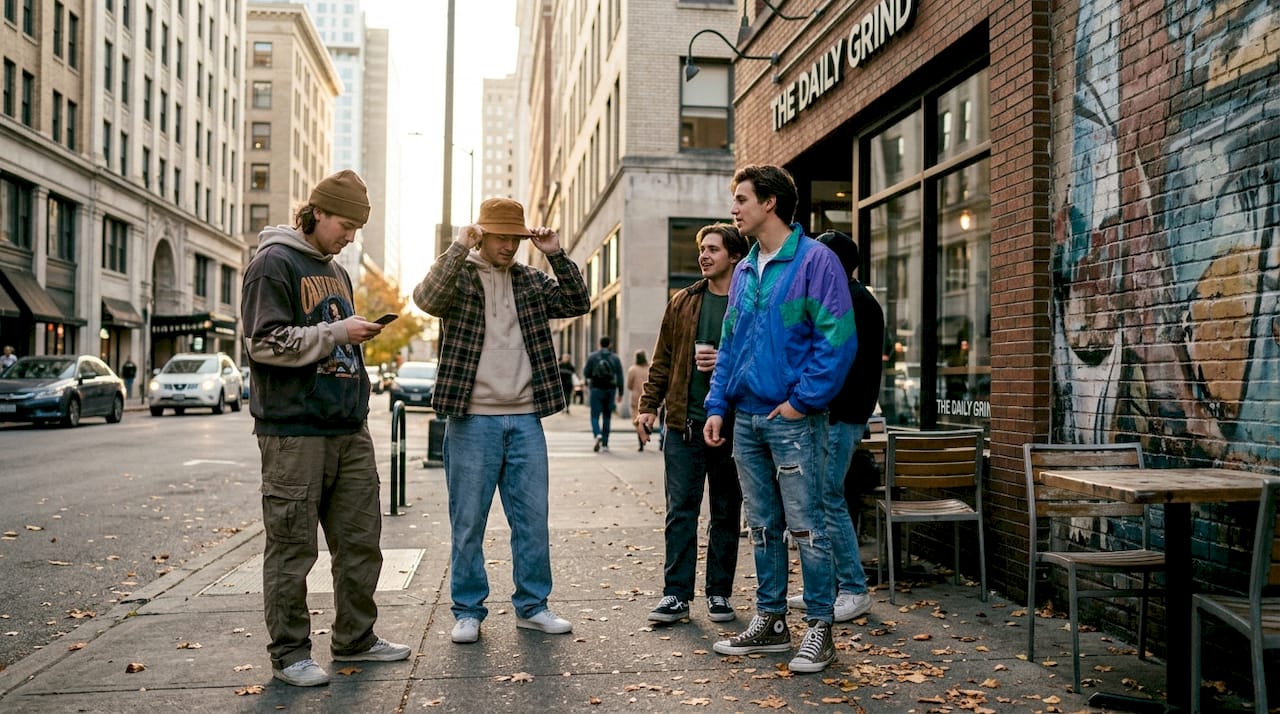
StreetWear operates on differentiation by default. The culture rewards originality and punishes copycats. When a style becomes too mainstream, the community moves on instantly. This constant pressure to innovate speeds up the conformity-differentiation cycle. A look that starts underground can hit peak saturation within months thanks to social media visibility. Then it fragments again as subgroups splinter off to create variations.
Several forces drive this acceleration:
- Social platforms broadcast niche styles globally within hours, collapsing geographic barriers
- Influencer culture creates rapid adoption curves as followers mimic popular figures
- Subculture cross-pollination blends skatewear, hip-hop, and high fashion into hybrid aesthetics
- Digital communities form around micro-identities, each demanding distinct visual signals
- Fast fashion responds to trends in weeks, making differentiation accessible to broader audiences
This environment makes fashion-forward individuality both easier and harder. You have infinite options for expressing yourself, but standing out requires constant awareness of what’s already been done. The key is understanding that streetwear’s rapid shifts follow the same conformity-differentiation logic as broader fashion cycles. They just happen faster and with more simultaneous variations.
Pro Tip: Follow underground streetwear accounts and local scene leaders, not just major influencers. By the time a trend hits mainstream platforms, it’s already entering conformity phase. Early adoption gives you differentiation advantage.
The fragmentation also means you can participate in multiple trend cycles simultaneously. Your sneaker game might reference 1990s basketball culture while your outerwear pulls from 2000s tech wear. This layering of references creates fashion identity through self-expression that’s uniquely yours. Understanding these dynamics helps you navigate the chaos strategically rather than feeling overwhelmed by constant change. It positions you to use trends as tools for personal branding rather than being controlled by them.
Balancing conformity and differentiation in your style
Applying cycle knowledge to your wardrobe requires strategic thinking about when to conform and when to differentiate. The goal isn’t picking one side. It’s understanding how to use both forces to build authentic style that evolves with you. The tension between conformity and differentiation isn’t something to resolve. It’s something to leverage.
Start with this framework for developing personal style within trend cycles:
-
Observe current trends without immediately adopting them. Spend two to three weeks watching what’s gaining traction in your communities. Notice which elements resonate with your existing aesthetic and which feel forced.
-
Identify conformity anchors that signal you understand current culture. These are widely adopted pieces that communicate you’re not disconnected from your generation. Think classic sneaker silhouettes, standard fit hoodies, or widely recognized streetwear brands.
-
Select differentiation elements that express your unique perspective. These might be vintage pieces, customized items, or emerging styles from underground scenes. They should feel authentic to your interests and values, not just contrarian for its own sake.
-
Layer references from multiple cycles to create depth. Combine a 1990s silhouette with 2010s color blocking and current accessories. This multi-temporal approach demonstrates fashion literacy while avoiding being stuck in one era.
-
Rotate your differentiation strategy as trends mature. When your standout pieces become mainstream, shift those to conformity anchors and introduce new differentiation elements. This keeps your style evolving naturally with cycles.
The streetwear context makes this especially relevant because the culture values both community belonging and individual expression. You need enough conformity to signal you’re part of the scene. You need enough differentiation to establish your unique position within it. This balance shifts based on context. A local meetup might reward more differentiation while a large festival might call for clearer conformity signals.
Understanding why fashion and identity matter helps you make these choices consciously rather than reactively. Your clothing becomes a tool for communication, not just decoration. You’re signaling values, affiliations, and aspirations through carefully chosen combinations. This intentionality separates fashion-forward individuals from those who simply follow trends blindly.
The cyclical nature means you don’t need to chase every new release. Some trends will return in modified form within years. Investing in quality pieces that work across multiple cycles provides better value than constantly replacing your wardrobe. Focus on items that can shift between conformity and differentiation roles as context changes. A classic bomber jacket might be conformity today but differentiation tomorrow when everyone moves to puffer coats.
This approach aligns with personal branding in fashion, where consistency matters more than constant reinvention. Your style should evolve but maintain recognizable elements that people associate with you. Think of it as managing a visual identity that responds to cycles without being dominated by them. This creates authenticity that resonates more powerfully than perfectly following top fashion trends.
The future of fashion trends: what to expect
Fashion cycles are accelerating and fragmenting further as digital platforms reshape how trends spread and evolve. Post-1980s fragmentation continues intensifying, driven by media proliferation and youth culture’s increasing influence. The next decade will see even more simultaneous microtrends, shorter cycle durations, and greater personalization. Understanding these shifts helps you stay ahead rather than constantly reacting.
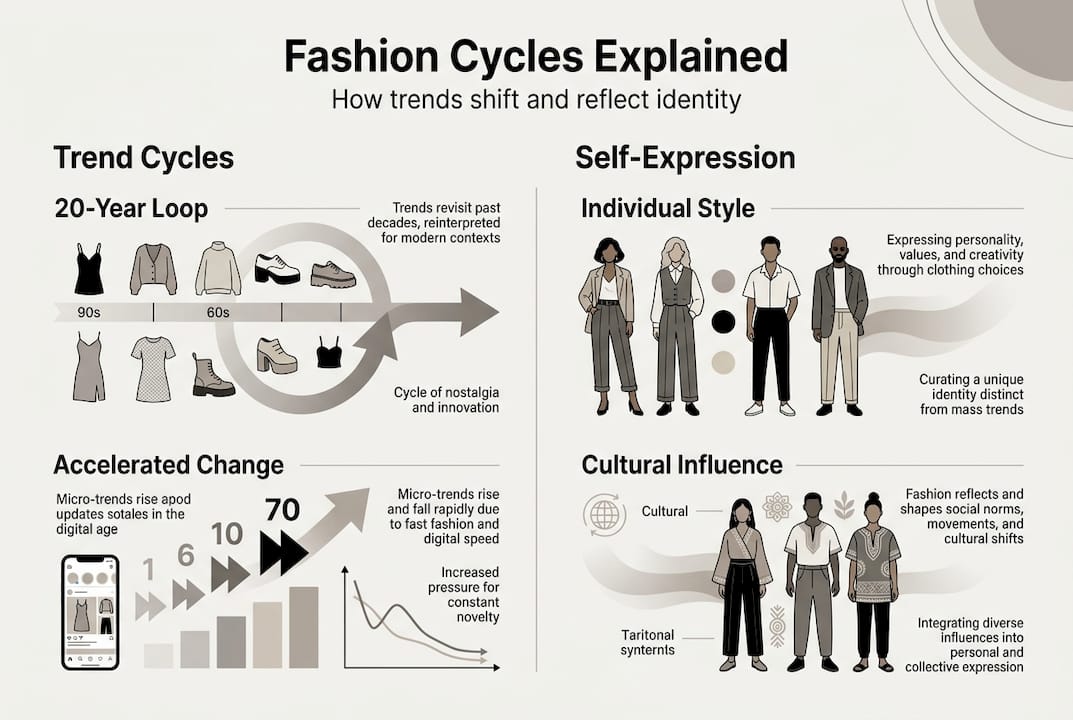
| Traditional Cycles | Future Dynamics |
|---|---|
| 20-year major shifts | 5 to 10-year micro-cycles with constant variation |
| Geographic limitations | Global instant visibility and cross-cultural blending |
| Seasonal collections | Continuous drops and real-time trend responses |
| Clear trend dominance | Multiple coexisting aesthetics without single winner |
| Mass conformity phases | Niche communities with distinct style languages |
Several forces will shape how trends evolve:
- Digital platforms enable hyper-specific communities to form around micro-aesthetics, creating thousands of simultaneous trend cycles
- Global cultural exchange blends influences from multiple regions instantly, producing hybrid styles that defy traditional geographic patterns
- Sustainability concerns push toward longer-lasting pieces and revival of quality over quantity, potentially slowing some cycle aspects
- Personalization technology allows customization at scale, reducing pressure for universal conformity
- Virtual fashion and digital identities create parallel trend systems that influence physical clothing choices
These changes don’t eliminate the conformity-differentiation dynamic. They multiply the contexts where it operates. You might conform within your local streetwear scene while differentiating from mainstream fashion. You might follow sustainability trends while rejecting fast fashion cycles. The complexity increases but the underlying psychology remains constant.
For streetwear enthusiasts, this means more opportunity and more noise. You’ll need stronger filters to identify which trends align with your identity and which are just temporary distractions. The advantage goes to people who understand the cycle mechanics and can spot early differentiation moves before they become conformity waves. This requires active participation in fashion movements and media influence rather than passive consumption.
The fragmentation also creates space for longer-term personal branding strategies. When no single trend dominates completely, consistency in your aesthetic becomes more valuable. You can build a recognizable style that evolves gradually rather than pivoting with every shift. This approach works especially well for people using fashion as part of broader identity projects or creative practices.
Youth culture will continue driving innovation because younger generations feel less attachment to existing norms. They’re more willing to experiment with radical differentiation, which pushes boundaries and creates new possibilities. Watching how trends shape youth style in streetwear gives you early signals about where broader culture is heading. The underground scenes of today become mainstream aesthetics of tomorrow, just on faster timelines than previous generations experienced.
Explore fresh styles to express your unique look
Now that you understand the cycles driving fashion change, it’s time to build a wardrobe that balances conformity with differentiation. ELEDOasis offers streetwear essentials designed for self-expression within current cultural movements. Our collection helps you signal belonging while maintaining individuality through carefully curated pieces that work across multiple trend contexts.
Our premium urban sweatpants provide the comfort and style that work whether you’re conforming to athleisure trends or differentiating through unique styling. Pair them with women’s athletic shoes that blend performance with aesthetic appeal. Complete your look with a high-quality unisex tee that serves as either a conformity anchor or differentiation element depending on how you style it. Each piece supports your journey toward authentic self-expression while respecting the cultural rhythms that make fashion meaningful.
FAQ
Is fashion trend change purely driven by influencers?
Influencers accelerate trend visibility and adoption speed, but they don’t create the fundamental cycles. Research shows deeper societal patterns of conformity and differentiation operating independently of any individual’s influence. Influencers amplify existing tensions rather than generating them from nothing. The 20-year cycle existed long before social media, proving that broader psychological and cultural forces drive fashion evolution.
Why do some fashion trends from decades ago come back?
Cyclical patterns bring back past styles approximately every 20 years as new generations discover and reinterpret them. When enough time passes, old styles feel fresh again because current youth didn’t experience them the first time. The conformity-differentiation swing naturally resurrects forgotten aesthetics as people search for ways to stand out from current trends. Each revival adds new context and meaning, making it distinct from the original despite visual similarities.
How can I use knowledge of fashion cycles to improve my wardrobe?
Plan purchases around trend anticipation to avoid buying pieces that will feel dated quickly. Invest in quality items that can shift between conformity and differentiation roles as cycles progress. Blend timeless staples with emerging trend elements to create longevity while staying current. Understanding personal branding in fashion helps you build a consistent aesthetic that evolves strategically rather than chasing every shift. This approach saves money and creates more authentic style.
Does streetwear follow different rules than mainstream fashion?
Streetwear accelerates the same conformity-differentiation cycle rather than following different rules. The culture rewards innovation and punishes copying more aggressively, which speeds up trend turnover. Multiple microtrends coexist simultaneously in streetwear, creating more complexity but operating on identical psychological principles. Understanding this helps you navigate streetwear’s rapid changes without feeling overwhelmed by constant shifts.
Will fashion cycles slow down or keep accelerating?
Current evidence suggests continued acceleration due to digital platforms and global connectivity, though sustainability concerns might create counterforces. Fragmentation will likely increase, meaning more simultaneous cycles rather than slower universal shifts. The 20-year major cycle may persist for broader cultural patterns even as micro-cycles operate on shorter timelines. Adapting to this reality requires stronger personal style frameworks rather than trying to follow every trend.